Mr. Akhilesh Srivastava to Speak at MoVACon in 24th-26th February 2026, Ahmedabad
Mr. Akhilesh Srivastava to Speak at MoVACon in 24th-26th February 2026, Ahmedabad Topic – Simplifying Intelligent Traffic Management Systems: Role of Technology


Mr. Akhilesh Srivastava to Speak at MoVACon in 24th-26th February 2026, Ahmedabad Topic – Simplifying Intelligent Traffic Management Systems: Role of Technology
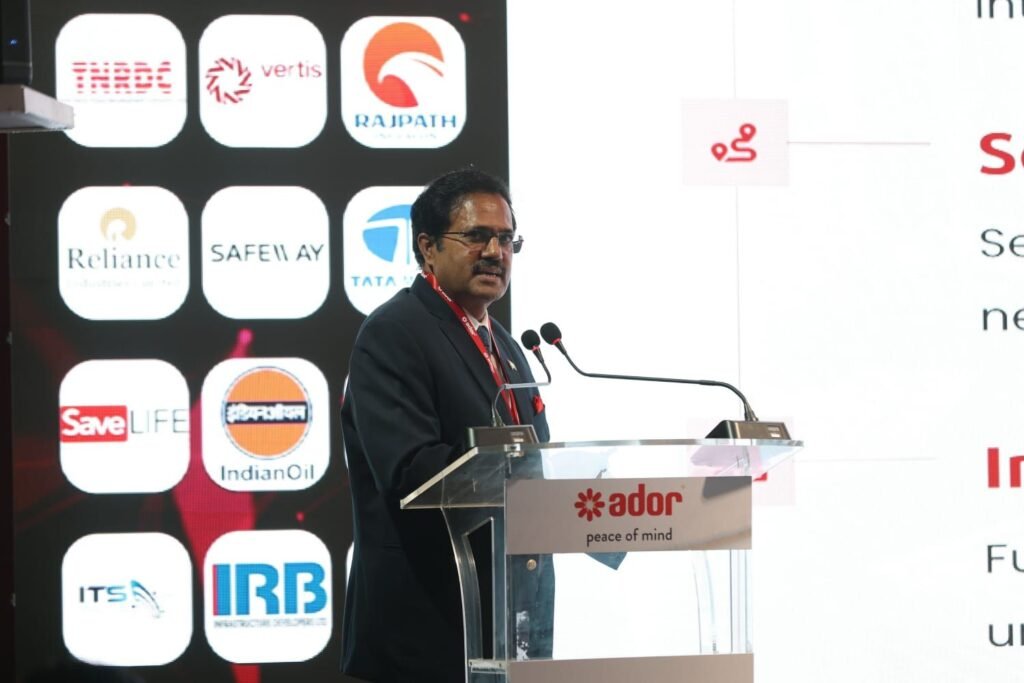
One small improvement in mobility can save thousands of lives, and discussions like these remind us why the work matters.
The “Ador Summit 2025: Innovative Mobility, Smarter Traffic & Safer Roads” in Pune was truly insightful.
From advanced ATMS solutions to enforcement technologies and modern road-safety infrastructure, every showcase highlighted how quickly India’s mobility ecosystem is evolving.

Mumbai, Delhi, Bengaluru: India’s well-developed cities, where the daily commute is a challenge for citizens.
The Delhi Metro can carry around 3,000 passengers at a time.
The Mumbai local is built for 6,000… but ends up carrying over 10,000.
We’ve built massive infrastructure, metros, highways, flyovers, expressways, etc., and the pressure on our transport systems keeps rising.

3 friends in the same car, in different seating positions, and only 1 survived.
While others are still battling with major injuries.
A body scan was conducted on three individuals involved in a car accident, each occupying a different seating position.
SMART MOBILITY AND ITS DEVELOPMENT IN DELHI Executive Summary Delhi, as the national capital and urban heart of India, leads the country in Intelligent Transportation Systems (ITS) deployment, integration, and innovation. The city has implemented a wide range of advanced mobility technologies—from citywide traffic automation and e-challan systems to multimodal public transit integration and expressway ITS. The city’s ITS vision is driven by institutions such as the Delhi Transport Department, Delhi Traffic Police, Delhi Metro Rail Corporation (DMRC), and New Delhi Municipal Council (NDMC). With a growing focus on AI-based traffic enforcement, real-time public transit monitoring, and seamless multimodal integration through the National Common Mobility Card (NCMC), Delhi has positioned itself as a benchmark for smart urban mobility in India. Flagship initiatives include the deployment of over 1,000 smart traffic junctions, introduction of AI-powered Integrated Traffic Management Systems (ITMS), real-time bus tracking and alert systems under AIS-140, smart parking pilots, and ITS applications across expressways and the Delhi-Meerut RRTS corridor. With continued investments, strong inter-agency coordination, and a data-driven approach to mobility, Delhi represents a mature ITS ecosystem that is now evolving toward predictive, integrated, and citizen-centric transport solutions. Urban Mobility & Transportation Challenges Delhi, despite its extensive transport infrastructure and policy innovation, faces chronic urban mobility issues exacerbated by rapid population growth, vehicular density, and inter-regional traffic pressure from the National Capital Region (NCR). Key Urban Mobility Challenges: Severe Traffic Congestion:With over 1.2 crore registered vehicles and high modal dependence on private transport, Delhi consistently ranks among the most congested cities globally. Air Pollution from Traffic:Vehicle emissions are a major contributor to Delhi’s PM2.5 levels, especially during winters, prompting the need for eco-driving enforcement, traffic rationalization, and EV transition supported by ITS. Manual Enforcement Overload:Despite strong deployment, traffic violation management still requires backup manual support, particularly at secondary intersections and in high-risk zones. Multimodal Integration Gaps:Delhi Metro, DTC buses, cluster buses, e-rickshaws, and suburban rail systems are not yet fully synchronized in terms of schedules, apps, and payment modes—affecting commuter convenience. Event-Driven Traffic Disruptions:Frequent political gatherings, festivals, and VIP movements create unpredictable congestion, requiring real-time incident detection and dynamic re-routing tools. Parking and Last-Mile Inefficiencies:Poorly managed parking and uncoordinated last-mile transport add to road clutter, idle emissions, and travel delays in commercial and residential areas. Current Mitigation Measures: Deployment of AI-based ITMS at 500+ intersections to reduce red-light violations and improve traffic signal responsiveness. Expansion of AVL and Emergency Alert Systems (EAS) under AIS-140 standards for bus safety and tracking. Integration of NCMC-enabled ticketing across metro and bus services for seamless multimodal access. Introduction of smart parking systems with mobile visibility and dynamic pricing in areas under NDMC. ITS Deployment & Technological Adoption Delhi has emerged as one of the most advanced cities in India in terms of ITS deployment and technological integration. The city’s strategy is built on the pillars of AI-driven traffic enforcement, multimodal transport coordination, and smart city digital infrastructure. ITS is being actively deployed across enforcement, public transport, expressways, and urban traffic management. Major Areas of ITS Deployment in Delhi: AI-Based Integrated Traffic Management Systems (ITMS):As of 2024, Delhi is deploying AI-enabled ITMS at over 500 intersections, using ANPR, RLVD, and speed violation detection systems. These are integrated with Delhi Police’s control room and linked to the Vahan database for real-time e-challan issuance. Vehicle Location Tracking and Emergency Alert Systems (VLT & EAS):All public buses are now fitted with AIS-140 compliant VLT devices and EAS buttons, monitored centrally to improve passenger safety and fleet traceability. Delhi Metro ITS Integration:Delhi Metro Rail Corporation (DMRC) uses Communication-Based Train Control (CBTC), passenger information display systems (PIDS), and automated fare collection systems with NCMC compatibility for high-speed, high-efficiency urban transit. Real-Time Public Bus Tracking:DTC and cluster buses are equipped with AVL systems, allowing commuters to view real-time arrival information via mobile applications and at major terminals. Smart Parking Systems (NDMC):NDMC has launched smart parking in high-traffic zones like Connaught Place, equipped with IoT sensors, digital signage, and mobile app integration for booking and payments. ITS on Expressways & RRTS Corridor:The Eastern Peripheral Expressway (EPE) and Delhi-Meerut RRTS incorporate ITS tools like ATMS, toll management systems, and passenger information systems for seamless express and intercity travel. Key Technologies Used: AI and deep learning-based traffic violation detection Adaptive signal control and traffic load sensing IoT-enabled smart parking and lighting infrastructure NCMC-based automated fare collection Real-time AVL, EAS, and cloud-connected control centers Delhi’s ITS ecosystem represents a multi-agency, platform-centric model that enables data sharing, predictive analytics, and responsive mobility services at scale. Key ITS Projects in Delhi Delhi has initiated several large-scale ITS projects that target enforcement automation, multimodal integration, and real-time transport visibility. These projects are implemented by Delhi Police, Transport Department, DMRC, and smart city bodies. Highlighted ITS Projects: These projects reflect Delhi’s transition toward automation, predictive enforcement, and multimodal synergy, positioning it as one of India’s top ITS-ready cities.
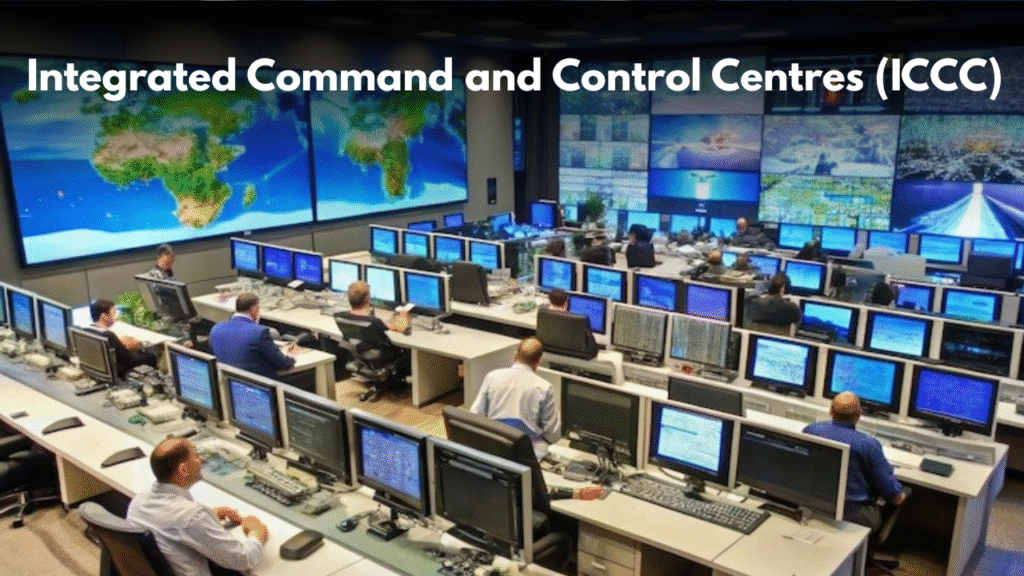
Integrated Command and Control Centres (ICCC) OverviewIntegrated Command and Control Centres (ICCCs) are centralized digital hubs that monitor and coordinate urban infrastructure and services. Acting as the brain of a smart city, these centres combine real-time data feeds from transport, civic utilities, surveillance systems, and emergency services, enabling timely responses and proactive governance. Role in Urban GovernanceBy 2023, more than 100 cities in India had established ICCCs through the Smart Cities Mission. These centres allow decision-makers to access information from multiple departments on a single screen—reducing delays, duplication, and miscommunication. In mobility, ICCCs connect directly with ATMS and PTMS platforms to manage congestion, support emergency routes, and optimize transport networks in real time. Application During EmergenciesICCCs proved their versatility during the COVID-19 crisis by transforming into pandemic control centres. Cities like Pune and Surat used ICCCs to monitor containment zones, hospital bed availability, and vaccination logistics—all while continuing routine civic monitoring functions. Data Integration and GovernanceOne of the key strengths of ICCCs lies in their ability to synthesize data from geographically dispersed and otherwise disconnected systems. Geographic Information System (GIS) mapping, traffic camera feeds, and service complaints from citizens converge into unified dashboards, enabling data-driven governance and long-term urban planning. Challenges and Opportunities The implementation of ICCCs is not without obstacles. High capital expenditure, data privacy concerns, and the integration of legacy systems are common barriers. Additionally, standardization across cities and departments remains a work in progress. Despite these challenges, initiatives like the National Urban Digital Mission and India Urban Observatory are setting the stage for interoperable, scalable systems. Future PotentialLooking ahead, ICCCs are expected to evolve into Digital Twins—virtual city models that allow for simulation-based decision-making. With the addition of AI, blockchain, and predictive analytics, ICCCs will become the command centres of fully automated, intelligent urban ecosystems.
Artificial Intelligence in India’s Intelligent Transportation Systems: Driving the Next Mobility Revolution Introduction: The AI Imperative in Urban Mobility India’s urban transformation is unprecedented. By 2047, over 600 million citizens will reside in urban regions, and vehicle ownership is expected to triple. However, this rapid expansion also leads to mounting congestion, traffic-related fatalities, parking challenges, and escalating emissions, costing the country nearly 5-7% of its GDP annually. Traditional infrastructure responses are proving insufficient. What India needs now is intelligent infrastructure with Artificial Intelligence (AI) integrated into Intelligent Transportation Systems (ITS). AI offers capabilities far beyond automation: predictive analysis, real-time adaptive systems, and the ability to learn from urban mobility patterns. AI is not merely an addition to traffic systems—it is the command center for India’s next-gen mobility. Market Trends: AI’s Expanding Footprint in ITS The Indian ITS market, as per the ITS India Forum Market Report (2025), is projected to grow at a CAGR of 14.79% between 2024 and 2035. AI-led systems such as Advanced Traffic Management Systems (ATMS), Vehicle-to-Everything (V2X), and AI-powered surveillance will be leading this growth. Table: Key AI-Enabled ITS Segments (2023–2047) III. Real-World AI Applications in ITS In India, AI is already enhancing urban mobility outcomes across various areas. In cities like Pune and Bengaluru, AI-based Adaptive Traffic Signal Control (ATSC) systems have reduced travel times up to 25% on selected routes. The Video Incident Detection and Enforcement System (VIDES) deployed by NHAI detects up to 14 different traffic violations in real time, ranging from animals on the roads to stalled vehicles. With the ITS India Forum, Delhi’s public transport body, DIMTS, utilizes AI to optimize bus fleet rotation and predict delays, enhancing punctuality and the overall commuter experience. In toll management, AI is now employed to detect fraudulent vehicle IDs and evasive driving behaviors with over 95% accuracy, thus improving revenue collection and transparency. Even environmental benefits are measurable. In Ahmedabad, AI-enabled traffic routing has led to an 11% reduction in CO₂ emissions by guiding vehicles away from congested corridors. The Policy and Regulatory Landscape India’s AI integration in ITS is supported by an evolving multi-tiered policy framework. The National Strategy on AI (2018) identified mobility as a priority sector. The Smart Cities Mission encourages the adoption of AI-enabled surveillance and transport analytics. Legal provisions under the Motor Vehicles (Amendment) Act, 2019, authorize AI-generated digital evidence. In 2023, MoRTH published ATMS standards that formally required AI-based real-time traffic monitoring systems. Additionally, the National Clean Air Program (NCAP) has prioritized AI-driven Intelligent Transportation System (ITS) tools in high-pollution urban areas. Together, these policies are creating a fertile environment for the scaled adoption of AI in mobility. Enabling Conditions for Scaled AI Adoption To mainstream AI in ITS, India needs both technology and institutional enablers: Data Infrastructure Establish an Open Mobility Data Exchange under the NIC, BIS, or MeitY. Mandate standardized APIs for vehicle OEMs, Infra Operators, and ITS vendors. Edge AI Deployment Enable on-device AI computation at traffic lights, intersections, and toll plazas to reduce bandwidth latency. Mobility AI Sandboxes Designate five cities like Delhi, Pune, Indore, Hyderabad, and Kochi as testing zones for AI pilots under regulatory relaxation. Capacity Building Create a pool of at least 10,000 ITS professionals trained in AI applications by 2030 through the ITS India Forum’s capacity-building programs, IITs, NITs, and NIC-accredited programs. AI Governance & Ethics MoRTH should collaborate with MeitY and NITI Aayog to develop a Code of Ethics for AI decision-making in mobility. Challenges and Strategic Enablers Despite positive momentum, India’s AI-ITS journey faces structural gaps that need to be addressed with urgency. AI requires vast, clean, and standardized datasets. At present, traffic data across cities is fragmented. Establishing an Open Mobility Data Exchange under the NIC, BIS, or MeitY would enable developers, agencies, and startups to build scalable, interoperable AI models. Infrastructure constraints are another barrier. To reduce latency and improve real-time accuracy, AI computation needs to shift toward the edge on traffic poles, signal boxes, and toll plazas. Infrastructure operators need to be fully integrated into the AI-enabled system. Human resource development is equally crucial. By 2030, India will require at least 10,000 trained AI-for-Mobility professionals working within urban local bodies, state transport departments, and municipal command centers. Finally, AI systems must operate within an ethical and legal framework. Given the use of facial recognition, license plate tracking, and behavioral data, India must develop privacy-first AI governance protocols specific to transport. Public-Private Partnerships and Innovation Push Private sector innovation is thriving. Companies like Netradyne and Awiros are building AI platforms for traffic analytics, and telecom giants like Jio and Airtel are investing in cloud-backed mobility AI solutions. Public-private collaborations are delivering results. In Pune’s smart corridor, real-time data from private ITS firms is now integrated into the city’s Integrated Command and Control Center (ICCC), improving emergency response and route optimization. A dedicated AI Mobility Innovation Fund worth ₹1,000 crore could catalyze broader deployment across India’s Tier 2 and Tier 3 cities. Additionally, India can benefit from bilateral AI partnerships—such as with Japan’s UTMS, which offers AI traffic forecasting models already tested in dense megacities. VII. Conclusion: Toward a National AI for Mobility Mission Artificial Intelligence is no longer optional in urban transport—it is foundational. Its ability to synthesize data, make instant decisions, and predict system-wide outcomes makes it indispensable for India’s mobility future. India must now establish a National AI for Mobility Mission (NAIMM) under the PM Gati Shakti framework. This mission should unify AI deployment across public transit, highways, tolling, and safety systems, backed by R&D funding, standardization, and outcome-based governance. By 2030, India must aim to: Integrate AI-based ITMS or ATMS in 100 cities Reduce urban travel times by 30% Cut transport-related fatalities by 50% Lower road emissions by 30% By embedding intelligence at the heart of mobility, India has the opportunity to move faster, smarter, greener, and safer. References ITS India Market Report (2025) – Transparency Market Research Ministry of Road Transport and Highways (MoRTH), 2023 – ATMS
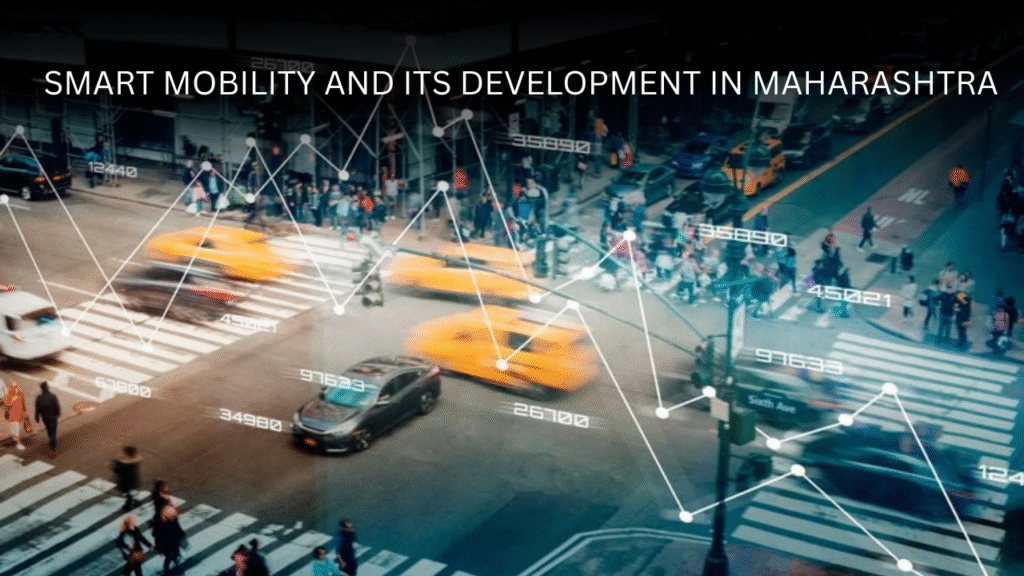
SMART MOBILITY AND ITS DEVELOPMENT IN MAHARASHTRA Executive Summary Maharashtra, one of India’s most urbanized and industrialized states, is rapidly advancing in the deployment of Intelligent Transportation Systems (ITS) to address its complex urban mobility and logistics challenges. With major cities like Mumbai, Pune, and Nagpur experiencing acute congestion, pollution, and safety issues, the state has prioritized ITS as a cornerstone of its transportation modernization strategy. Major initiatives include the deployment of AI-powered Intelligent Traffic Management Systems (ITMS) on the Mumbai-Pune and Samruddhi Expressways, the introduction of Maharashtra Logistics Policy 2024 with a dedicated Intelligent Logistics Management System (ILMS), and the integration of real-time monitoring systems across highways. Maharashtra’s approach is anchored in leveraging ITS for not just traffic regulation but also freight management, road safety, and multimodal urban transit. With strong institutional backing from agencies such as MSRDC, MMRDA, and the Maharashtra Transport Department, combined with Smart Cities and public-private partnerships, the state is well-positioned to become a national leader in ITS innovation and implementation. Urban Mobility & Transportation Challenges Maharashtra faces significant transportation challenges that are characteristic of fast-growing economies—marked by urban sprawl, high vehicle ownership, mixed traffic conditions, and fragmented transit networks. These issues necessitate the urgent adoption of ITS solutions. Key Challenges: Severe Congestion in Metro Cities: Mumbai and Pune rank among India’s most congested cities. Peak-hour delays, limited road expansion scope, and inadequate signal coordination contribute to inefficient traffic flow. Rising Accident Rates on Highways: Major highway stretches like Pune-Nashik, Pune-Aurangabad, and Mumbai-Kolhapur report high accident rates. Inadequate surveillance, poor enforcement, and lack of emergency response coordination worsen safety outcomes. Urban Public Transport Strain: Systems like BEST in Mumbai and PMPML in Pune struggle with punctuality, overcrowding, and lack of real-time commuter information, leading to increased reliance on private vehicles. Air Pollution & Emissions: Transport accounts for a significant share of PM2.5 and CO₂ emissions, especially in urban centers. Idling traffic and diesel-heavy public fleets amplify environmental concerns. Inadequate Freight Monitoring: Maharashtra is a logistics hub, but freight movement remains poorly monitored. Lack of route optimization, tracking, and digital documentation slows down cargo throughput and increases costs. Limited ITS in Tier-II Cities: Outside metro regions, cities like Nashik, Solapur, and Aurangabad have limited ITS adoption due to funding gaps, low digital penetration, and lack of skilled personnel. Response Through ITS: AI-enabled ITMS has been deployed on key expressways, equipped with over 200 smart cameras for detecting violations and managing incidents in real time. Control centers and optical fiber networks are being integrated along new highway projects to ensure data-driven monitoring and response capabilities. Smart city programs in Nagpur, Pune, and Nashik are embedding ITS into ICCCs, e-enforcement systems, and multimodal transit hubs. Maharashtra’s transportation challenges present both a pressing concern and a strong opportunity for ITS to create safer, faster, and greener mobility systems. ITS Deployment & Technological Adoption Maharashtra has adopted a multi-dimensional approach to ITS deployment, focusing on both urban and highway applications. With support from national programs and state-level infrastructure missions, ITS is being embedded into traffic management, expressway safety, logistics optimization, and public transport systems. Key Areas of ITS Deployment: Highway ITS (ATMS) Deployment: Maharashtra has installed AI-based Advanced Traffic Management Systems (ATMS) on major corridors, including the Mumbai-Pune Expressway and Samruddhi Mahamarg (Nagpur-Mumbai Expressway). These systems use ANPR, speed detection radars, and thermal cameras to detect violations, manage traffic flow, and respond to incidents in real-time. Optical Fiber & Surveillance Backbone: Over 520 km of optical fiber cabling has been laid along the Samruddhi corridor, enabling continuous video feeds, sensor integration, and connectivity to central command centers. Urban ITMS in Smart Cities: Cities like Pune, Nagpur, and Nashik have deployed Integrated Traffic Management Systems (ITMS), featuring adaptive traffic signals, CCTV surveillance, RLVD, and smart variable message signs (VMS) connected to ICCCs. Public Transport AVL & Passenger Info Systems: PMPML in Pune and BEST in Mumbai have installed GPS tracking on city buses, integrated with mobile apps and passenger display boards for real-time updates and service monitoring. Multimodal Hubs & Smart Ticketing: Projects such as Nagpur’s Multi-Modal Integration Hub and Pune Metro’s smart ticketing system using National Common Mobility Cards (NCMC) demonstrate early adoption of commuter-centric ITS tools. Freight & Logistics ITS: Under the new Maharashtra Logistics Policy, the state is deploying an Intelligent Logistics Management System (ILMS) to track freight vehicles, optimize routing, and streamline last-mile delivery across major logistics parks and border checkpoints. Technology Stack in Use: AI-based traffic analytics ANPR, RLVD, and incident detection cameras Adaptive traffic signals and edge computing devices Vehicle tracking (AVL) and dynamic route guidance NCMC-compliant ticketing and fare systems Real-time dashboard integration via ICCCs Maharashtra’s ITS infrastructure is becoming increasingly integrated, intelligent, and commuter-oriented—laying the groundwork for predictive analytics, autonomous fleet management, and connected vehicle ecosystems. Key ITS Projects in Maharashtra Maharashtra’s ITS landscape is marked by several high-impact projects led by MSRDC, MMRDA, Urban Local Bodies (ULBs), and Smart City SPVs. These projects address traffic congestion, safety, public transport modernization, and freight efficiency across the state. These projects are designed to enhance road safety, reduce congestion, improve public transport reliability, and modernize freight operations—contributing directly to Maharashtra’s goal of becoming a data-driven, mobility-first state. Smart City & Urban ITS Integration Maharashtra has strategically leveraged the Smart Cities Mission to integrate Intelligent Transportation Systems (ITS) into urban mobility infrastructure. With nine cities under the Smart Cities program—Mumbai, Pune, Nagpur, Nashik, Thane, Kalyan-Dombivli, Aurangabad, Solapur, and Navi Mumbai—the state has embedded ITS into traffic management, surveillance, public transport, and multimodal integration. Key Urban ITS Integrations: Integrated Command and Control Centres (ICCCs): Pune, Nagpur, and Nashik have operational ICCCs that monitor traffic flows, smart parking availability, public transport vehicles, and environmental conditions. These centers enable real-time incident response, enforcement, and mobility planning. Smart Enforcement Systems: RLVD, ANPR, and speed detection cameras are widely deployed in cities like Thane and Pune. These systems are linked to e-challan platforms and integrated with ICCCs for centralized violation processing. Adaptive Traffic Signals & VMS: Pune and Kalyan-Dombivli

Top Technologies Shaping India’s ITS Landscape Artificial Intelligence: Steering the Future of Mobility Introduction: The AI Imperative in Urban Mobility India’s urban transformation is unprecedented. By 2047, over 600 million citizens will reside in urban regions, and vehicle ownership is expected to triple. However, this rapid expansion also leads to mounting congestion, traffic-related fatalities, parking challenges, and escalating emissions, costing the country nearly 5-7% of its GDP annually. Traditional infrastructure responses are proving insufficient What India needs now is intelligent infrastructure with Artificial Intelligence (AI) integrated into Intelligent Transportation Systems (ITS). AI offers capabilities far beyond automation: predictive analysis, real-time adaptive systems, and the ability to learn from urban mobility patterns. AI is not merely an addition to traffic systems—it is the command center for India’s next-gen mobility. 2. Market Trends: AI’s Expanding Footprint in ITS The Indian ITS market, as per the ITS India Forum Market Report (2025), is projected to grow at a CAGR of 14.79% between 2024 and 2035. AI-led systems such as Advanced Traffic Management Systems (ATMS), Vehicle-to-Everything (V2X), and AI-powered surveillance will be leading this growth. Table: Key AI-Enabled ITS Segments (2023–2047) III. Real-World AI Applications in ITS In India, AI is already enhancing urban mobility outcomes across various areas. In cities like Pune and Bengaluru, AI-based Adaptive Traffic Signal Control (ATSC) systems have reduced travel times up to 25% on selected routes. The Video Incident Detection and Enforcement System (VIDES) deployed by NHAI detects up to 14 different traffic violations in real time, ranging from animals on the roads to stalled vehicles. With the ITS India Forum, Delhi’s public transport body, DIMTS, utilizes AI to optimize bus fleet rotation and predict delays, enhancing punctuality and the overall commuter experience. In toll management, AI is now employed to detect fraudulent vehicle IDs and evasive driving behaviors with over 95% accuracy, thus improving revenue collection and transparency. Even environmental benefits are measurable. In Ahmedabad, AI-enabled traffic routing has led to an 11% reduction in CO₂ emissions by guiding vehicles away from congested corridors. 4. The Policy and Regulatory Landscape India’s AI integration in ITS is supported by an evolving multi-tiered policy framework. The National Strategy on AI (2018) identified mobility as a priority sector. The Smart Cities Mission encourages the adoption of AI-enabled surveillance and transport analytics. Legal provisions under the Motor Vehicles (Amendment) Act, 2019, authorize AI-generated digital evidence. In 2023, MoRTH published ATMS standards that formally required AI-based real-time traffic monitoring systems. Additionally, the National Clean Air Program (NCAP) has prioritized AI-driven Intelligent Transportation System (ITS) tools in high-pollution urban areas. Together, these policies are creating a fertile environment for the scaled adoption of AI in mobility. Enabling Conditions for Scaled AI Adoption To mainstream AI in ITS, India needs both technology and institutional enablers: Data Infrastructure Establish an Open Mobility Data Exchange under the NIC, BIS, or MeitY. Mandate standardized APIs for vehicle OEMs, Infra Operators, and ITS vendors. Edge AI Deployment Enable on-device AI computation at traffic lights, intersections, and toll plazas to reduce bandwidth latency. Mobility AI Sandboxes Designate five cities like Delhi, Pune, Indore, Hyderabad, and Kochi as testing zones for AI pilots under regulatory relaxation. Capacity Building Create a pool of at least 10,000 ITS professionals trained in AI applications by 2030 through the ITS India Forum’s capacity-building programs, IITs, NITs, and NIC-accredited programs. AI Governance & Ethics MoRTH should collaborate with MeitY and NITI Aayog to develop a Code of Ethics for AI decision-making in mobility. Challenges and Strategic Enablers Despite positive momentum, India’s AI-ITS journey faces structural gaps that need to be addressed with urgency. AI requires vast, clean, and standardized datasets. At present, traffic data across cities is fragmented. Establishing an Open Mobility Data Exchange under the NIC, BIS, or MeitY would enable developers, agencies, and startups to build scalable, interoperable AI models. Infrastructure constraints are another barrier. To reduce latency and improve real-time accuracy, AI computation needs to shift toward the edge on traffic poles, signal boxes, and toll plazas. Infrastructure operators need to be fully integrated into the AI-enabled system. Human resource development is equally crucial. By 2030, India will require at least 10,000 trained AI-for-Mobility professionals working within urban local bodies, state transport departments, and municipal command centers. Finally, AI systems must operate within an ethical and legal framework. Given the use of facial recognition, license plate tracking, and behavioral data, India must develop privacy-first AI governance protocols specific to transport. VI. Public-Private Partnerships and Innovation Push Private sector innovation is thriving. Companies like Netradyne and Awiros are building AI platforms for traffic analytics, and telecom giants like Jio and Airtel are investing in cloud-backed mobility AI solutions. Public-private collaborations are delivering results. In Pune’s smart corridor, real-time data from private ITS firms is now integrated into the city’s Integrated Command and Control Center (ICCC), improving emergency response and route optimization. A dedicated AI Mobility Innovation Fund worth ₹1,000 crore could catalyze broader deployment across India’s Tier 2 and Tier 3 cities. Additionally, India can benefit from bilateral AI partnerships—such as with Japan’s UTMS, which offers AI traffic forecasting models already tested in dense megacities. VII. Conclusion: Toward a National AI for Mobility Mission Artificial Intelligence is no longer optional in urban transport—it is foundational. Its ability to synthesize data, make instant decisions, and predict system-wide outcomes makes it indispensable for India’s mobility future. India must now establish a National AI for Mobility Mission (NAIMM) under the PM Gati Shakti framework. This mission should unify AI deployment across public transit, highways, tolling, and safety systems, backed by R&D funding, standardization, and outcome-based governance. By 2030, India must aim to: Integrate AI-based ITMS or ATMS in 100 cities Reduce urban travel times by 30% Cut transport-related fatalities by 50% Lower road emissions by 30% By embedding intelligence at the heart of mobility, India has the opportunity to move faster, smarter, greener, and safer. Vehicle-to-Everything (V2X) Communication Systems Overview Vehicle-to-Everything (V2X) communication is ushering in the next era of transport innovation by
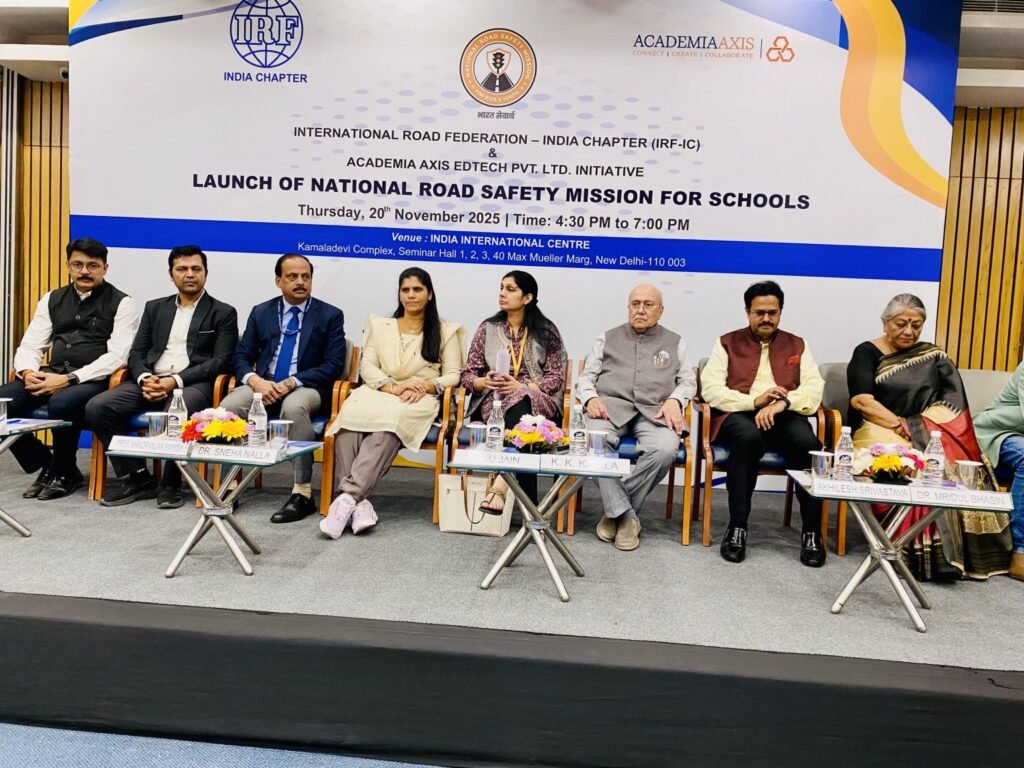
National Road Safety Mission launched to protect students around schoolsThe initiative seeks to enhance safety in school zones while fostering a culture of road awareness and responsible driving from a young age.