Author name: backups

Mr. Akhilesh Srivastava to Speak at MoVACon in 24th-26th February 2026, Ahmedabad
Past Event

Mr. Akhilesh Srivastava to Speak at 2025 APEC Smart Mobility Forum

Mr. Akhilesh Srivastava to Speak at 2025 APEC Smart Mobility Forum We are proud to share that Mr. Akhilesh Srivastava, President of the International Road Federation (India Chapter), will be a distinguished speaker at the 2025 APEC Smart Mobility Forum in Incheon, South Korea.  Representing India on a global platform, Mr. Srivastava will share key insights on smart mobility innovation, sustainability, and public-private collaboration—contributing to shaping a smarter, safer, and more connected future for all. Date: 4–5 August 2025Venue: Paradise City Hotel, Incheon, Republic of KoreaSession: Thematic Session 2 – INNOVATE His presence is a testament to India’s growing leadership in smart transportation and intelligent mobility systems.

Advancing Traffic Safety using ADAS and DMS
Past Event

Advancing Traffic Safety using ADAS and DMS

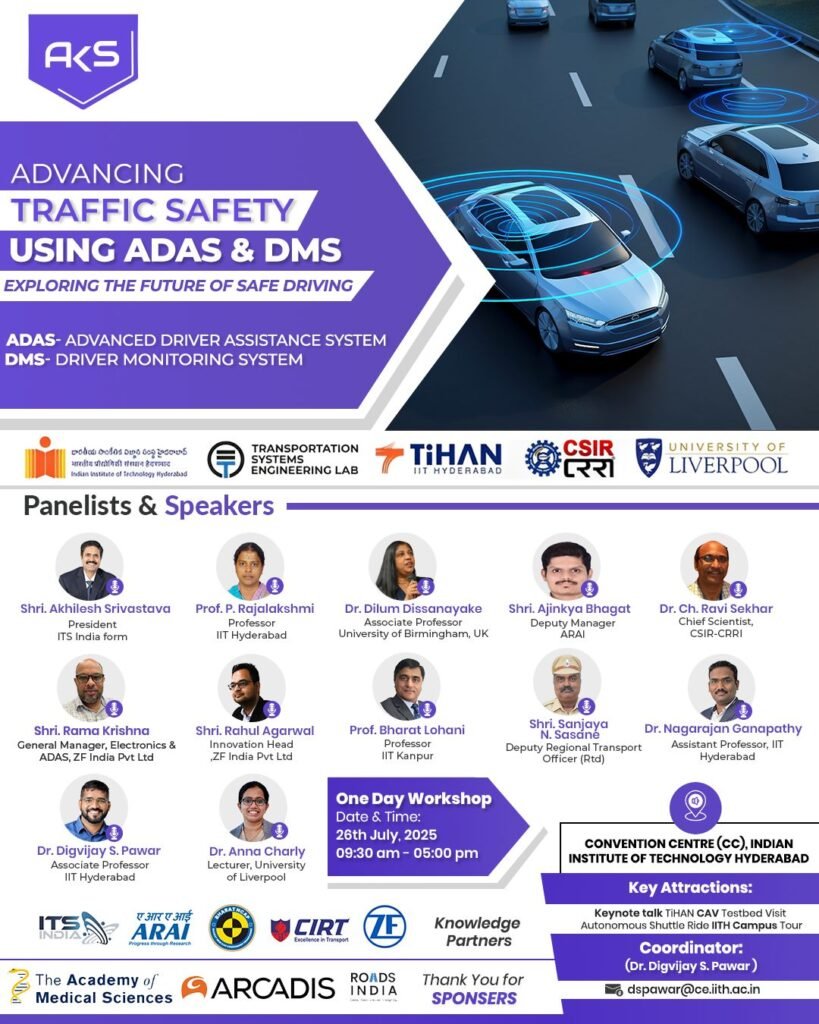
Advancing Traffic Safety using ADAS and DMS We’re proud to announce the participation of MR. Akhilesh Srivastava, President of ITS India Forum, as a distinguished speaker at the One-Day Workshop on “Advancing Traffic Safety using ADAS and DMS” at IIT Hyderabad on 26th July 2025. A pioneer in intelligent transport systems and digital mobility, Shri Srivastava will share valuable insights on India’s leadership in integrating Advanced Driver Assistance Systems (ADAS) and Driver Monitoring Systems (DMS) for a safer and smarter road ecosystem. Join us as experts from across the globe come together to shape the future of road safety and autonomous mobility. Location: Convention Centre, IIT HyderabadTiming : 9:30 AM – 5:00 PM, 26th July 2025

India’s Highways to 2047: Building the roadmap through innovation, speed, and sustainability
Past Event

The future of mobility is here – are you ready

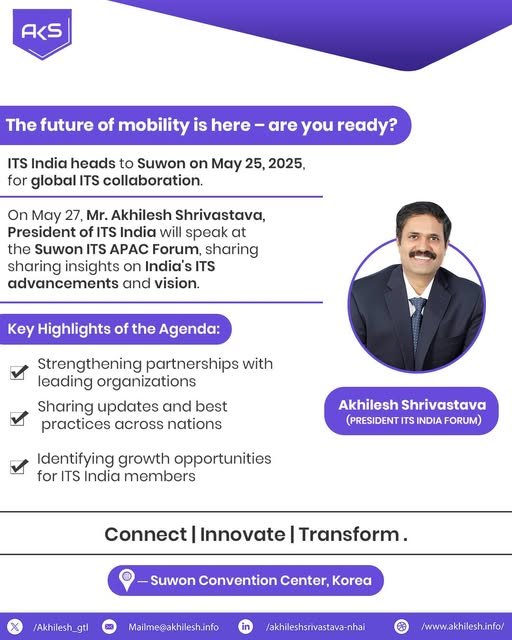
The future of mobility is here – are you ready? The ITS India delegation is set to visit Suwon on May 25, 2025, marking a significant step toward international collaboration in intelligent transportation.On May 27, Mr. Akhilesh Shrivastava, President of ITS India, will address the Suwon ITS Asia-Pacific Forum (APAC), sharing insights on India’s ITS advancements and vision. Key Highlights of the Agenda: Strengthening partnerships with leading organizations Sharing updates and best practices across nations Identifying growth opportunities for ITS India members Let’s Connect | Innovate | Transform the future of transportation together! Location: Suwon Convention Center, Korea

India’s Vision for Intelligent Transport Gains Global Recognition at IRF Summit in Athens
Blog

India’s Vision for Intelligent Transport Gains Global Recognition at IRF Summit in Athens

India’s Vision for Intelligent Transport Gains Global Recognition at IRF Summit in Athens Athens, Greece, July 3, 2025 — The International Road Federation (IRF) held its Annual Summit and Strategy Workshop from June 29 to July 3, 2025, in Athens, Greece, convening global mobility leaders, policymakers, and infrastructure experts. Among the distinguished participants was Mr. Akhilesh Srivastava, President of the IRF India Chapter and ITS India Forum, representing India at the global stage in his first official participation as the newly elected IRF IC President. His presence signified a growing global recognition of India’s transformative journey in intelligent transportation systems (ITS), road safety, and digital mobility. This year’s summit centered on reshaping IRF’s strategic roadmap for 2025–2030, with a strong focus on creating more impactful, inclusive, and future-ready solutions for road infrastructure and sustainable mobility. Mr. Akhilesh Srivastava, as a core member of the IRF Strategy Group and a newly elected member of the IRF Board of Directors, contributed significantly to these deliberations. Shaping IRF’s Five-Year Strategy At the Strategy Workshop, IRF leadership, including newly confirmed President Dimitrios Mandalozis, and re-elected Board Members such as Bill M. Halkias, Anouar BENAZZOUZ, Nicolas Miravalls, and others, worked alongside new appointees like Mr. Akhilesh Srivastava played a key role in shaping a new strategic agenda for IRF’s future. Discussions revolved around: Mainstreaming Artificial Intelligence (AI) and digital twin technologies in infrastructure management Enhancing global cooperation on road safety and Intelligent Transportation System (ITS) standards Scaling capacity building and knowledge transfer initiatives, particularly for Global South nations Supporting harmonized road user charging systems and sustainable financing models Mr. Akhilesh Srivastava’s insights, grounded in India’s large-scale implementation of ITS and tolling reforms, were particularly well received. He emphasized India’s ongoing evolution from manual to digital and satellite-based tolling, successful AI-powered ATMS deployments, and the use of CV2X technologies for emergency preemption systems. Highlighting India’s Leadership in Traffic Management During the Traffic Management Symposium, a key segment of the IRF Summit, Mr. Akhilesh Srivastava actively participated in discussions addressing future-ready traffic governance. He showcased India’s innovations in traffic management, particularly the NHAI Data Lake project, implementation of GNSS tolling pilots, and the landmark “Road Safety 2.0” initiative, adopted across multiple states. His presentation highlighted India’s capability to scale complex ITS projects with strong public-private collaboration. Real-world examples, such as the CV2X Emergency Corridor in Bengaluru and Intelligent Traffic Enforcement through AI-ANPR in Delhi and Maharashtra, illustrated India’s unique ability to create customized, scalable, and outcome-focused digital solutions. Strengthening Strategic International Ties The Athens Summit also served as a powerful forum for bilateral and multilateral collaboration. Mr. Akhilesh Srivastava engaged with global leaders to deepen India’s integration with key international stakeholders: Joost Vantomme, President of ERTICO-ITS Europe, and Mr. Akhilesh Srivastava engaged in discussions on aligning ITS standards between Europe and India. Their meeting highlighted the need for enhanced collaboration on 5G V2X, data governance in connected mobility, and safety-critical interoperability Dimitrios Mandalozis, the newly elected IRF Global President, welcomed India’s increasing role. Mr. Akhilesh Srivastava conveyed India’s readiness to co-lead global discussions on mobility-as-a-service and sustainable transport finance models. Norbert Schindler, Founder of GNSS Consulting, expressed his appreciation for India’s adoption of GNSS tolling. Their discussions focused on learnings from European tolling transitions, and possible collaborations to enhance satellite-based tolling architecture in India. These meetings underscored India’s readiness to not only adopt global best practices but also to contribute meaningfully to shaping them. Recognition of Indian Innovation on Global Platforms It was a proud moment to see Indian innovations receive recognition at this prestigious global event. Companies such as Kataline Infraproducts, known for their intelligent road safety interventions, Interise Trust for their innovative works, and TRL works in Kerala, were honored for their innovative contributions to road infrastructure development in India. Kataline was honored under the IRF Circle of Excellence for its data-driven intervention at Waddhamna Junction. Interise Trust also received accolades for pioneering road infrastructure models that address last-mile and underserved regional needs. These recognitions serve as a testament to the progress Indian companies are making by combining indigenous innovation with global standards. The fact that such interventions are being piloted in Indian states like Maharashtra and Kerala and acknowledged internationally is a clear indication that India is moving towards becoming a global leader in digital road safety. Mr. Akhilesh Srivastava congratulated these teams and reiterated IRF India Chapter’s commitment to supporting and amplifying such impactful work. He also shared the plans for expanding the IRF Innovation Accelerator in India to nurture similar startups in the field of AI-enabled infrastructure and ITS. Charting the Course to Atlanta and Beyond With the conclusion of the IRF Summit, focus shifted to the upcoming ITS World Congress 2025 in Atlanta. Under the leadership of Mr. Akhilesh Srivastava, the IRF India Chapter will lead India’s participation and oversee its technical showcase at this prestigious global event. The India Pavilion will highlight use cases on Free-flow tolling, integrated ATMS platforms, digital enforcement systems, and the Safe Driving Score framework. Strategic preparations are also in progress to organize a special session titled “India@2047: Digital Highways and Safer Roads,” which will feature senior Indian government leaders and international partners. This initiative aims to highlight India’s vision for future-ready infrastructure in alignment with the Viksit Bharat 2047 goals. A Transformative Moment for India India’s participation in the IRF Annual Summit and Strategy Workshop 2025 was not just symbolic—it was transformational. It positioned India as a frontrunner in the global mobility transformation, bringing real-world deployments, research-backed frameworks, and policy innovations to the international arena. Mr. Akhilesh Srivastava’s leadership, backed by his deep involvement in India’s digital transformation journey in highways, road safety, and transport governance, brought clarity and momentum to India’s voice on global platforms. His inclusion in the IRF Board ensures that India will continue to shape the next generation of sustainable mobility solutions and contribute toward global knowledge sharing. As India prepares for its ambitious highway expansion under the PM Gati Shakti and Bharatmala programs, aligned with AI, data-driven monitoring, and


Meghalaya’s New Rule: Driver Details Must Be Displayed in Commercial Vehicles
Blog

Meghalaya’s New Rule: Driver Details Must Be Displayed in Commercial Vehicles

Meghalaya’s New Rule: Driver Details Must Be Displayed in Commercial Vehicles In a major step toward enhancing passenger safety and promoting transparency, Meghalaya is poised to become the first state in India to require all commercial vehicles to publicly display their drivers’ personal details inside the passenger cabin—where travelers can see it—at all times. This innovative regulation is not just about rules; it’s about building trust, empowering travelers, and making the state’s rapidly growing tourism sector safer for everyone. What the New Mandate Says   Starting soon, commercial vehicle owners—including taxis, buses, and other vehicles for hire—must display the driver’s name, license number, contact number, and home address in a clearly visible spot inside the vehicle. The rule applies only to vehicles with commercial permits issued by the state transport department’s District Transport Officers (DTOs). Private cars, government vehicles, and transport owned by public sector enterprises are excluded from this requirement. Once the official notification is issued, owners will have one month to comply. The government’s intent is clear: No more anonymous rides—passengers will know exactly who is behind the wheel. Why This Step Matters   Tourism Minister Paul Lyngdoh has consistently highlighted that the primary goal of this regulation is to foster a sense of security and accountability among passengers, particularly for tourists. As Meghalaya continues to attract more visitors every year, ensuring the well-being of every traveler is a top priority. The regulation is also a preventive measure against potential criminal activities involving commercial vehicles, helping to deter wrongdoing by making driver identities transparent. “When passengers know who is driving them, it creates a sense of trust and accountability,” said Lyngdoh. This transparency is expected to instill confidence in both locals and tourists, making public transport a more attractive and reliable option. It’s a simple but powerful way to bridge the gap of anonymity, giving passengers a direct line of recourse in case of any issues. The Broader Context: Safety, Tourism, and Public Trust   Meghalaya’s regulation comes at a time when tourism is booming in the Northeast. The state is known for its breathtaking landscapes, rich culture, and welcoming people. However, with increased tourist footfall comes a heightened responsibility to ensure visitor safety. The government’s move is part of a broader effort to strengthen the tourism ecosystem and solidify Meghalaya’s reputation as a “safe and welcoming destination”. The mandate is especially relevant for women passengers and solo travelers, who often face higher risks on the road. By making driver information readily available, the government hopes to reduce fear, deter crime, and empower passengers to take action if needed. The taxi industry’s reaction has been measured yet supportive. The East Khasi Hills Taxi Welfare Association (EKHTWA) has stated it will discuss the regulation with the government before taking an official position. Association leaders have also called for increased deployment of traffic police to complement the new rule, highlighting the importance of both regulatory and ground-level enforcement for true safety. Practical Steps for Passengers and Drivers   For passengers, this change means knowing exactly who is responsible for your journey. It’s still a good idea—as advised by EKHTWA—to stay vigilant: note the vehicle’s registration number, share ride details with friends or family, and take photos if you feel unsafe. Such proactive measures, combined with the new transparency, create a layered safety net. For drivers and vehicle owners, following the rule is simple: clearly showcase the required information inside the vehicle. While some may see this as an added responsibility, it’s also an opportunity to differentiate themselves as safe, reliable operators in a competitive market. The Bigger Picture: A Model for India?   Meghalaya’s approach is unique. While India is moving toward advanced safety technologies for commercial vehicles—like digital load displays and drowsiness alerts—Meghalaya’s policy grounds itself in human accountability and transparency. It’s a low-cost, high-impact solution that other states could emulate, especially tourism-heavy regions. If implemented effectively, this regulatory innovation could set a new standard for passenger safety across India. It blends prevention, trust-building, and empowerment—core elements for modern, people-centric transport policy. Looking Ahead   The next month will be crucial as the government issues the formal notification and the industry prepares to comply. The ultimate measure of success will be whether passengers feel safer and whether incidents involving commercial vehicles decline. For travelers, this is a reassuring step forward. For Meghalaya, it’s a chance to lead by example, showing that sometimes the best safety measures are the simplest ones—transparency, accountability, and a commitment to protecting every journey. What do you think? Would you feel safer seeing your driver’s details? Should other states adopt similar measures? Share your thoughts in the comments!

Digital Transformation of Infrastructure: Building the Future Today
Blog

Digital Transformation of Infrastructure: Building the Future Today

Digital Transformation of Infrastructure: Building the Future Today Introduction The world is undergoing a rapid digital revolution, and infrastructure—the backbone of economies—is no exception. From smart cities and energy grids to transportation networks and public services, digital transformation is reshaping how infrastructure is designed, built, and managed. Organizations that embrace this shift gain efficiency, resilience, and sustainability, while those that lag risk obsolescence. The Importance of Digital Transformation in Infrastructure Digital transformation in infrastructure is critical for several reasons. First, it enhances operational efficiency through automation, IoT, and AI, optimizing maintenance, reducing downtime, and cutting costs. For example, predictive maintenance in rail networks prevents failures before they occur. Second, it supports sustainability by enabling smart grids and renewable energy integrations, helping achieve net-zero goals, as seen in Southeast Asia’s solar power expansion. Third, it strengthens resilience by improving disaster response and cybersecurity, which is crucial for utilities and transport hubs. Finally, it enables customer-centric services, such as digital public infrastructure (DPI) like Brazil’s PIX payment system, which improves accessibility and user experience. Key Trends Driving Digital Infrastructure 1.) Cloud and Edge Computing Cloud and edge computing are becoming essential, with hybrid cloud models balancing scalability and data sovereignty, while edge computing supports real-time decision-making in sectors like healthcare and logistics. 2.) AI and Automation AI and automation are optimizing traffic flows, energy consumption, and predictive maintenance—IoT sensors in water treatment plants, for instance, can detect leaks instantly. 3.) Cybersecurity and Zero-Trust Architecture Cybersecurity is another critical focus, with zero-trust architecture and AI-based threat detection gaining traction, especially given the rising cost of breaches. 4.) Smart Cities and IoT Smart cities and IoT are revolutionizing urban infrastructure, with applications ranging from smart meters to adaptive traffic lights. Legacy System Modernization Additionally, legacy system modernization is reducing costs and improving efficiency, as outdated systems can increase expenses by up to 30%, whereas phased modernization can cut costs by 25%. Challenges in Digital Infrastructure Transformation Despite these advancements, challenges remain. Resistance to change can hinder progress, requiring a digital-first culture with strong leadership and training. Legacy system integration often poses difficulties, but modular upgrades and APIs can ensure seamless interoperability. Data silos remain a persistent issue, but unified data platforms can enable real-time analytics. Cybersecurity risks continue to grow, necessitating AI-driven threat monitoring and regular penetration testing. Regulatory compliance also presents hurdles, requiring partnerships with experts to navigate evolving standards like GDPR and HIPAA. Success Stories: Real-World Case Studies Real-world case studies highlight the benefits of digital transformation. Bangalore Airport improved baggage handling and operational efficiency through RFID tracking. Saudi Arabia’s hybrid cloud adoption reduced downtime by 48%, while Brazil’s PIX system revolutionized digital payments, boosting financial inclusion. The Future of Digital Infrastructure Looking ahead, infrastructure is expected to be fully digitized by 2040, with AI, 5G, and green energy at its core. To stay competitive, organizations must prioritize modernization, invest in upskilling their workforce, and leverage strategic partnerships with tech providers and governments. Conclusion In conclusion, digital transformation is no longer optional—it is the foundation of future-ready infrastructure. Whether through cloud adoption, AI integration, or sustainable tech, the time to act is now. Organizations that embrace these changes will lead the way in building resilient, smart, and efficient digital ecosystems. Are you ready to transform your infrastructure? Partner with experts to develop a strategy that ensures long-term success in this digital age.

From FASTag to Future-Tech: Transforming India’s Highways
Blog

From FASTag to Future-Tech: Transforming India’s Highways

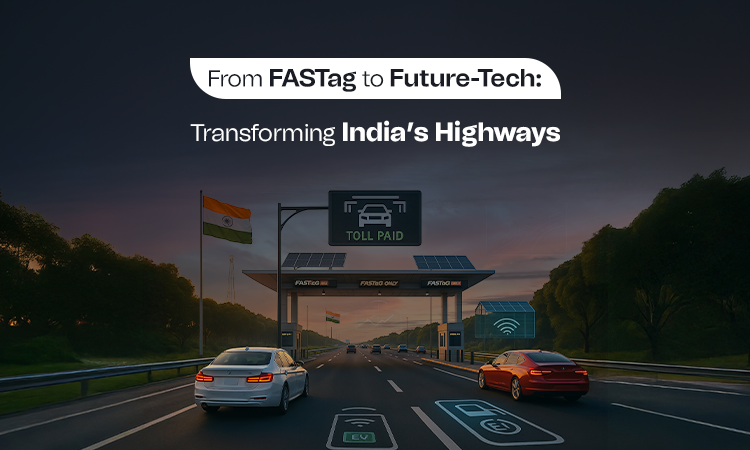
From FASTag to Future-Tech: Transforming India’s Highways The FASTag Revolution India’s highway infrastructure has undergone a radical transformation in the last decade, and at the heart of this change lies FASTag—a simple yet revolutionary RFID-based toll collection system. Introduced in 2014 and mandated nationwide by 2021, FASTag has not only digitized toll payments but also laid the foundation for a smarter, seamless, and sustainable mobility ecosystem.Today, with over 90% adoption and 50+ million active users, FASTag has:  Reduced toll plaza waiting times from 8 minutes to under 47 seconds.  Saved 15% fuel consumption by minimizing idling at toll booths.  Cut CO₂ emissions by 20%, contributing to India’s green mobility goals. But this is just the beginning. The next phase of India’s highway evolution is already underway—moving beyond FASTag to barrier-free, AI-driven, and satellite-based tolling. The Next Frontier: India’s Leap into Future-Tech Tolling  1. From RFID to GNSS & ANPR: The End of Toll Plazas? The government is now piloting Global Navigation Satellite System (GNSS) and Automatic Number Plate Recognition (ANPR) technologies to eliminate physical toll booths entirely. GNSS-Based Tolling: Vehicles will be tracked via onboard GPS units, charging tolls based on distance traveled rather than fixed toll points. Enables barrier-free highways, reducing congestion and fuel wastage. Pilot projects are already testing this model on select corridors. ANPR for Seamless Payments: High-speed cameras will scan license plates and deduct tolls automatically. Challenges remain (e.g., non-standardized plates), but AI is improving accuracy. “We must build on FASTag’s success, not replace it. The next phase should integrate GNSS/ANPR while keeping FASTag wallets as the payment backbone.” — Bhargav Yogesh Padh, Head, Fleet Business. 2. AI & IoT: Making Highways Smarter The latest FASTag upgrades now include: AI-powered fraud detection to flag mismatched vehicle classes or tampered tags. Cloud-based toll management for real-time transaction processing and dynamic blacklisting. IoT-enabled plazas with RFID, ANPR, and edge computing for instant decisions. 3. Dynamic Tolling & Congestion Pricing India is exploring: Time-based tolling (higher fees during peak hours). Freight corridor optimization for logistics efficiency. Smart parking integration with FASTag wallets. Shri Nitin Gadkari’s Vision: Highways of Tomorrow   Union Minister Shri Nitin Gadkari has set an ambitious roadmap: Vision 2047: Future highways will be green, smart, and integrated with multi-modal logistics hubs. Bharatmala Pariyojana: 34,800 km of new expressways, including electric vehicle (EV)-ready corridors. Nagpur as India’s logistics capital, leveraging MIHAN (Multi-Modal International Hub) for seamless freight movement. “Our goal is to rival U.S. highways in efficiency while leading in sustainability with ethanol, hydrogen, and electric mobility.” — Nitin Gadkari. Challenges & the Road Ahead   While the future is promising, key hurdles remain: Interoperability: Ensuring GNSS/ANPR works across states and operators. Data Security: Protecting user privacy in GPS-based tolling. Rural Awareness: Expanding digital toll literacy beyond urban centers. Call to Action: Join the Mobility Revolution The ITS India Forum is driving this transformation through: Policy advocacy for next-gen tolling standards. Pilot projects like Bengaluru’s CV2X ambulance corridors (38% faster emergency response). Global collaborations, including the Road User Charging (RUC) Alliance for congestion pricing. Conclusion: A Highway Renaissance   From FASTag’s cashless convenience to AI-driven, barrier-free highways, India’s mobility landscape is evolving at an unprecedented pace. Under Shri Nitin Gadkari’s leadership, we are not just building roads—we are crafting an intelligent, inclusive, and sustainable transport future. “The highways of tomorrow will be invisible—seamless, smart, and sustainable. And India will lead this revolution.” — Akhilesh Srivastava

Top 7 Benefits of Sustainable Infrastructure for Communities and the Planet
Blog

Top 7 Benefits of Sustainable Infrastructure for Communities and the Planet

Top 7 Benefits of Sustainable Infrastructure for Communities and the Planet As the world grapples with the dual challenges of rapid urbanization and climate change, the concept of sustainable infrastructure is gaining momentum. Unlike traditional development methods, green infrastructure focuses on building systems that are environmentally responsible, economically viable, and socially inclusive. From eco-friendly roads and energy-efficient buildings to integrated water systems and renewable energy installations — sustainable infrastructure is reshaping how we design, build, and live in our spaces.Let’s explore the top 7 benefits of sustainable infrastructure for both communities and the planet: 1. Reduces Environmental Impact One of the most significant benefits of sustainable infrastructure is its positive impact on the environment. Green buildings and infrastructure projects use fewer natural resources, emit less carbon dioxide, and help reduce pollution. For instance, using recycled construction materials, solar panels, rainwater harvesting systems, and green roofs minimizes the ecological footprint of new developments. Result: Lower greenhouse gas emissions, improved air and water quality, and better conservation of ecosystems. 2. Promotes Energy Efficiency and Conservation Sustainable infrastructure often incorporates renewable energy sources like solar, wind, or geothermal power. Green buildings are designed to be energy-efficient, using insulation, smart lighting systems, and natural ventilation to reduce dependency on fossil fuels.Result: Long-term energy savings for homeowners, businesses, and governments while reducing reliance on non-renewable resources. 3. Enhances Public Health Traditional infrastructure often leads to pollution, overcrowded urban areas, and a lack of green spaces — all of which negatively affect public health. In contrast, sustainable infrastructure promotes cleaner air and water, more walkable communities, better waste management, and increased access to nature.Result: Lower rates of respiratory diseases, mental health benefits from green spaces, and an overall improved quality of life. 4. Builds Climate Resilience Sustainable infrastructure is designed to withstand extreme weather conditions, such as floods, droughts, and heatwaves, which are becoming more frequent due to climate change. Features like permeable pavements, rain gardens, and efficient drainage systems help cities adapt and remain functional during environmental stresses. Result: Reduced damage during natural disasters and faster recovery after extreme weather events. 5. Drives Economic Growth Investing in sustainable infrastructure creates green jobs, boosts local economies, and attracts environmentally conscious investors and businesses. Over time, maintenance costs are also lower due to durable, high-quality construction and resource-efficient systems. Result: A sustainable economy that supports long-term prosperity while protecting the environment. 6. Improves Social Equity and Inclusion Sustainable infrastructure projects often prioritize access and inclusivity. For example, designing public transport systems that reach underserved areas or developing housing projects with energy-efficient features ensures that all community members benefit — not just the affluent. Result: Reduced inequality and improved living standards for marginalized populations. 7. Enhances Community Engagement and Awareness Green infrastructure projects typically involve local stakeholders in the planning and development stages. This encourages community involvement, fosters environmental awareness, and builds a sense of shared responsibility. Result: Stronger, more connected communities with a collective commitment to sustainability. Conclusion Sustainable infrastructure is not just a buzzword — it’s a necessity for building a better future. As cities expand and resources become more scarce, it is critical to adopt solutions that protect our environment while supporting economic and social development. The transition to sustainable infrastructure benefits not only the planet but also the people who call it home.By embracing these green alternatives, governments, businesses, and communities can create healthier, more resilient, and more inclusive places to live and thrive.

Akhilesh Srivastava’s TEDx Talk: How Technology Can Save Millions of Lives on India’s Roads
Blog

Akhilesh Srivastava’s TEDx Talk: How Technology Can Save Millions of Lives on India’s Roads

Akhilesh Srivastava’s TEDx Talk: How Technology Can Save Millions of Lives on India’s Roads In a deeply moving TEDx talk, Akhilesh Srivastava, a leading voice in road safety and smart mobility, shared a truth that has haunted him for three decades: “Every family is waiting for someone to return home.” This simple yet devastating realization struck him years ago at the site of a horrific road crash—a moment that reshaped his life’s purpose. Since then, his mission has been clear: Not just to make transportation faster But to ensure that every journey ends safely India’s Road Safety Crisis: A Silent Epidemic India records over 1.8 lakh road fatalities every year—a staggering 1.5 million lives lost in the last decade alone. These aren’t just numbers; they represent fathers, mothers, children, and dreams cut short. What makes this tragedy even more painful? Most of these deaths were avoidable. Srivastava argues that road crashes are not “accidents”—they are the direct result of systemic failures: Poor road design Lack of enforcement Low public awareness Weak accountability The Turning Point: From Grief to Action Standing at that crash site years ago, Srivastava realized that technology could be the game-changer in preventing such tragedies. At TEDx, he shared how innovation can turn helplessness into hope: AI-Powered Collision Alerts – Giving drivers critical extra seconds to react and avoid crashes. Smart Traffic Management – Using real-time data to prevent congestion and reckless driving. Intelligent School & Pedestrian Zones – Protecting the most vulnerable with automated speed checks and alerts. Predictive Analytics – Identifying high-risk zones before disasters happen. The Power of Collaboration: Policy + Technology = Lives Saved Srivastava emphasized that we already have the tools—what’s missing is: Political Will – Making road safety a national priority. Public Awareness – Changing behavior through education. Public-Private Partnerships – Bringing together governments, tech firms, and citizens. “Miracles happen when ambition meets execution,” he said. Countries like Sweden and the Netherlands have drastically reduced fatalities through smart policies and technology—India can too. Beyond Rules: Road Safety is a Matter of Empathy Srivastava’s most powerful message? Road safety isn’t just about laws—it’s about humanity. Every speeding vehicle carries someone’s loved one. Every ignored helmet means a family’s world could shatter. Every reckless driver is gambling with lives beyond their own. A Call to Action: Who Will You Save? If you’ve ever: Lost someone in a road crash Had a near-miss on the road Believed in a future where no family waits in vain —This is your fight too. Akhilesh Srivastava’s TEDx talk is more than a speech—it’s a blueprint for saving millions.

ITS India Forum Joins ITS Asia Pacific Forum: Advancing India’s Role in Smart Mobility
Blog

ITS India Forum Joins ITS Asia Pacific Forum: Advancing India’s Role in Smart Mobility

ITS India Forum Joins ITS Asia Pacific Forum: Advancing India’s Role in Smart Mobility The ITS India Forum has been unanimously accepted as a member of the esteemed ITS Asia Pacific Forum, marking a significant step forward in India’s integration into the region’s leading intelligent transportation network. This development marks a pivotal moment in India’s intelligent transportation evolution, effectively linking the country’s vast and dynamic mobility ecosystem with the Asia-Pacific region’s premier intelligent transport network. India, with the second-largest road network globally and now ranked as the third-largest automobile market, is emerging as a major global force in the mobility sector. This strategic partnership is set to fast-track India’s transport innovation by providing access to global best practices, fostering regional collaboration, and unlocking unparalleled opportunities for growth and development. A Strategic Boost to India’s Evolving Mobility Landscape With rapid expansion in both infrastructure and vehicle population, India’s inclusion in the ITS Asia Pacific Forum comes at a crucial time. The nation’s highway network continues to grow at an impressive pace, reflecting its increasing significance in the global mobility economy. “India, home to the world’s second-largest road network and third-largest vehicle market, stands as a major global force in the mobility sector,” said Mr. Akhilesh Srivastava, President of ITS India Forum. “Becoming part of the ITS Asia Pacific Forum enables us to harness our strengths to drive transformative advancements in India’s transportation systems.” This membership gives India a seat at the table in regional ITS strategy discussions, allowing the nation’s unique challenges and innovations to influence the development of future intelligent transportation policies across the Asia-Pacific region. Key Benefits for India’s Mobility Ecosystem   1. ) Access to Global Best Practices Indian stakeholders now have access to global advancements in Intelligent Transportation Systems (ITS), including smart infrastructure, autonomous mobility, and next-generation traffic management solutions. These insights will help fast-track the deployment of effective mobility solutions across the country. 2.) Enhanced Collaboration and Partnerships The forum offers a robust platform for Indian entities to collaborate with international governments, corporations, and research institutions. This will facilitate joint ventures, pilot programs, and knowledge-sharing that can drive innovation and scale up local solutions. 3.) Technology Exchange and Innovation Indian experts will now participate in cross-border technology exchanges, contributing local innovations and integrating cutting-edge solutions such as AI-based traffic optimization, connected vehicle platforms, and smart city mobility tools. 4.) Influence in Global Policy Development By participating in high-level discussions, India will help co-create policies and standards that align global best practices with local needs, fostering a balanced and sustainable transportation framework. “This membership represents a pivotal milestone in the evolution of India’s Intelligent Transportation Systems landscape,” stated the ITS India Forum. “It opens new avenues for innovation, learning, and global cooperation that will define the future of transport in India.” India Set to Make a Mark at ITS Asia-Pacific Congress 2025 in Suwon, South Korea The ITS India Forum is preparing to lead a high-level Indian delegation to the 20th ITS Asia-Pacific Congress, scheduled for May 27–30, 2025, in Suwon, South Korea. This international forum will spotlight cutting-edge mobility technologies and sustainable transport solutions, including electric and hydrogen-powered vehicles. A key highlight of India’s participation will be a keynote address by Mr. Akhilesh Srivastava, centered on inclusive, sustainable, and future-ready mobility. He will unveil a strategic roadmap aimed at transforming India’s transportation landscape through innovations like Mobility as a Service (MaaS), connected vehicle technologies, dynamic road pricing models, and sustainable energy solutions. The Indian delegation will also actively engage in discussions on global collaboration, technology co-development, and bilateral pilot projects, reinforcing India’s commitment to shaping and adopting global ITS advancements. Driving the Future of Smart Mobility Through Global Collaboration India’s induction as the 12th member of the ITS Asia Pacific Forum marks a landmark step that will accelerate the country’s progress toward next-generation mobility solutions. With direct access to global networks of expertise, India can adopt proven technologies, skip redundant development cycles, and achieve faster implementation of solutions in areas like: Smart traffic and signal management Autonomous and connected transportation Real-time traveler information systems Scalable MaaS platforms Moreover, this move positions India not just as a beneficiary but also as a contributor to the global ITS narrative. The country’s experiences with high-volume road networks and complex urban mobility offer valuable insights for peers across the Asia-Pacific region. “Suwon 2025 represents a step toward deeper global cooperation for a connected, sustainable future,” said Mr. Akhilesh Srivastava. “India is prepared to lead, learn, and collaborate internationally to shape the future of intelligent transportation.” Looking Ahead: India to Feature at ITS World Congress 2025 in Atlanta, USA Strengthening its global presence, the ITS India Forum also announced plans to lead a sizable Indian delegation to the ITS World Congress in Atlanta, USA, from August 24–28, 2025. A dedicated “ITS India Pavilion” will be set up to showcase India’s home-grown innovations, start-ups, and industry leaders in the smart mobility space. Conclusion: A New Era of Intelligent Transport for India India’s inclusion in the ITS Asia Pacific Forum ushers in a new era of strategic collaboration, technological exchange, and strengthened global leadership in intelligent mobility. This alliance will empower India to deploy next-gen ITS solutions—from digital tolling and smart city traffic systems to green mobility initiatives—while aligning with global best practices. By embracing this collaborative vision, India is poised to revolutionize its transportation ecosystem, enhance commuter safety, reduce congestion, and build a more sustainable, inclusive, and intelligent future of mobility.

Scroll to Top